Flow
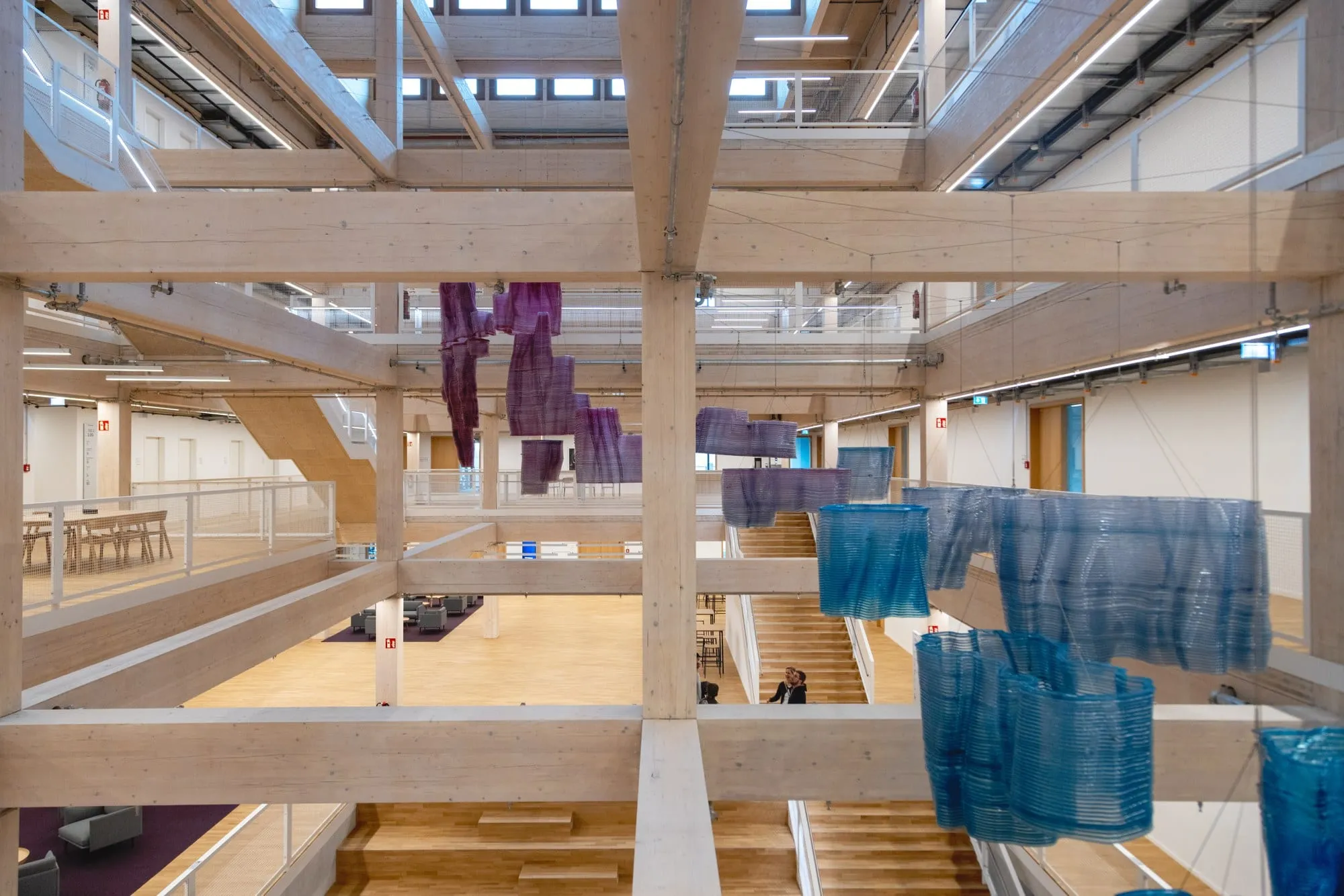
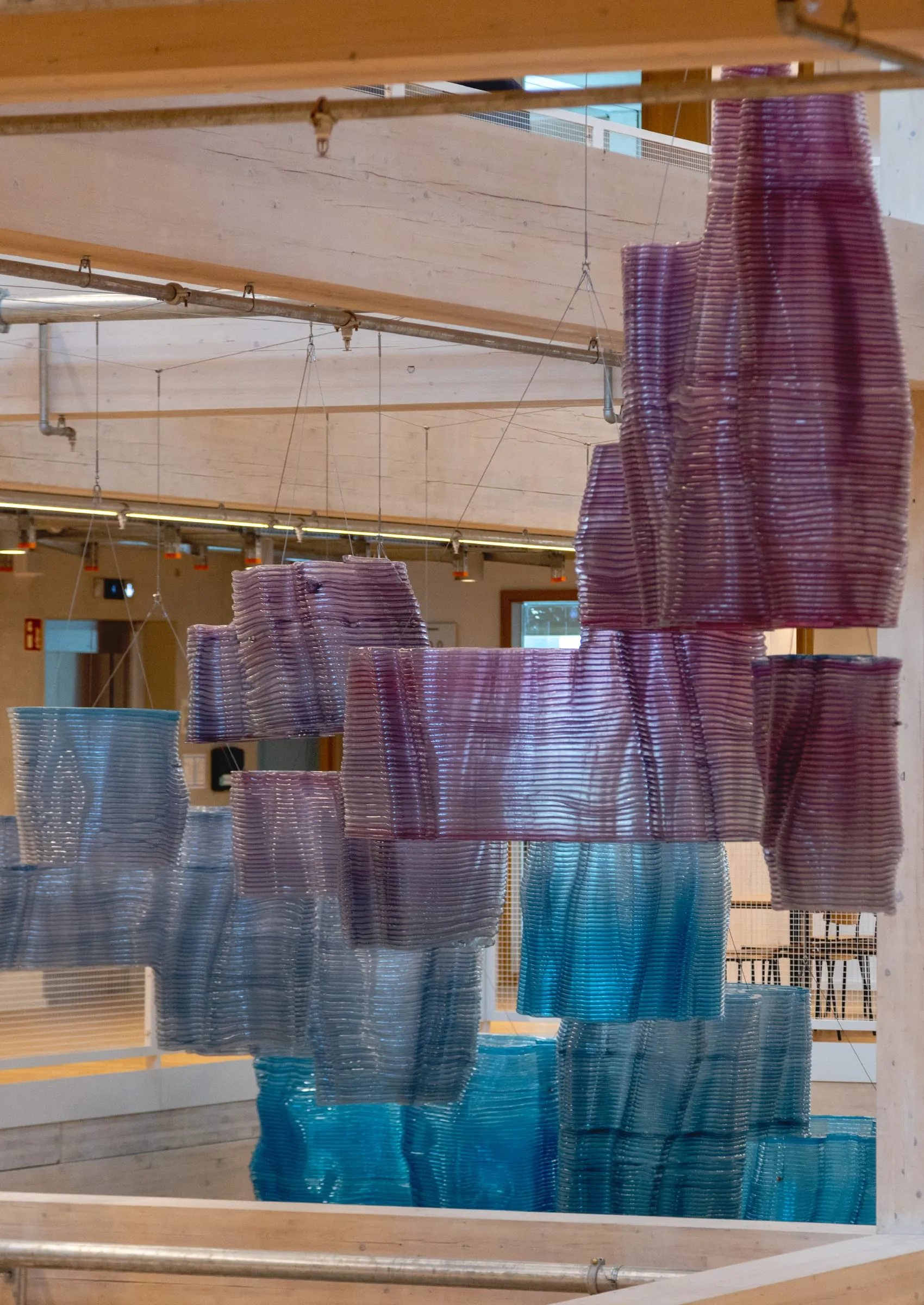
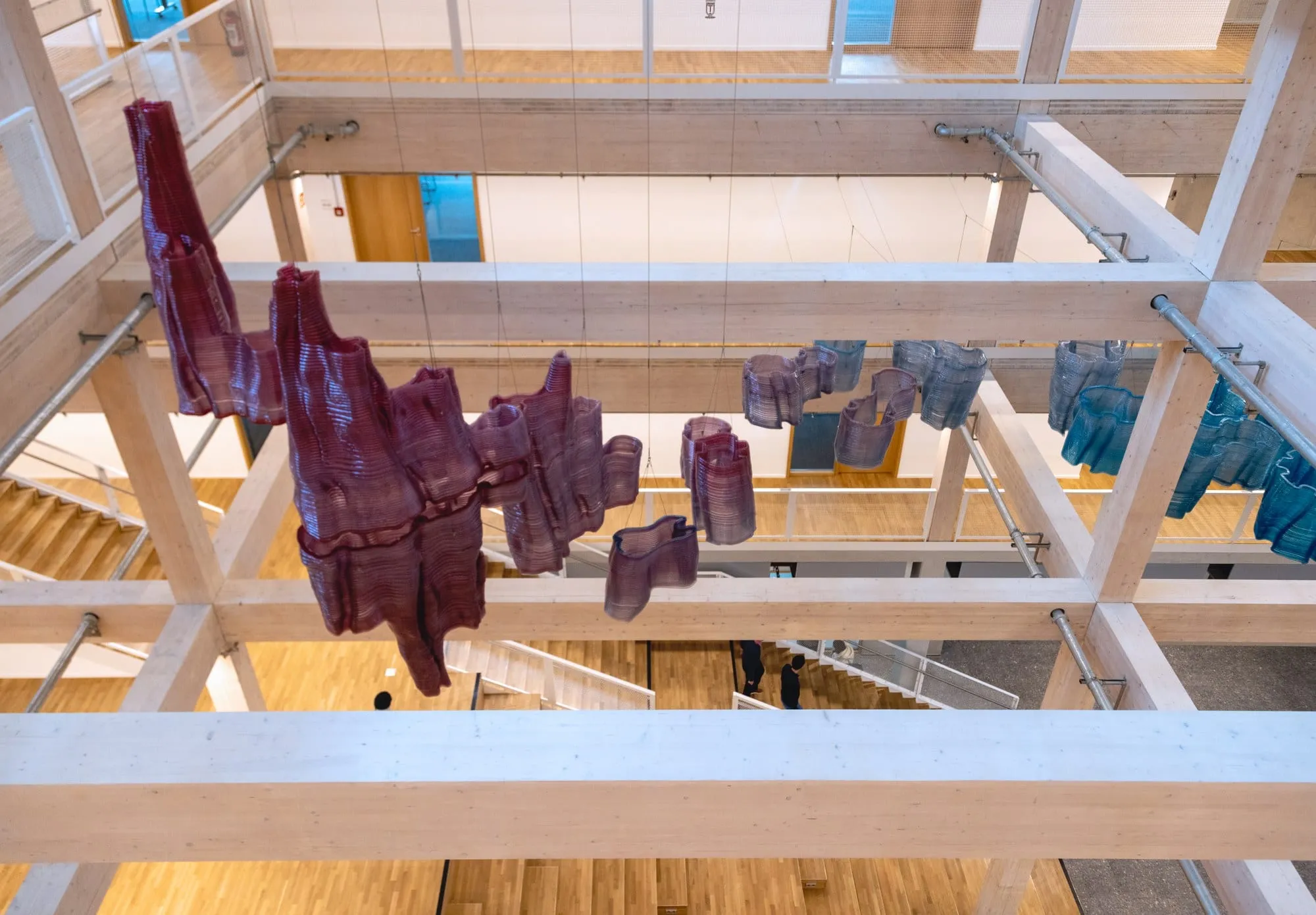
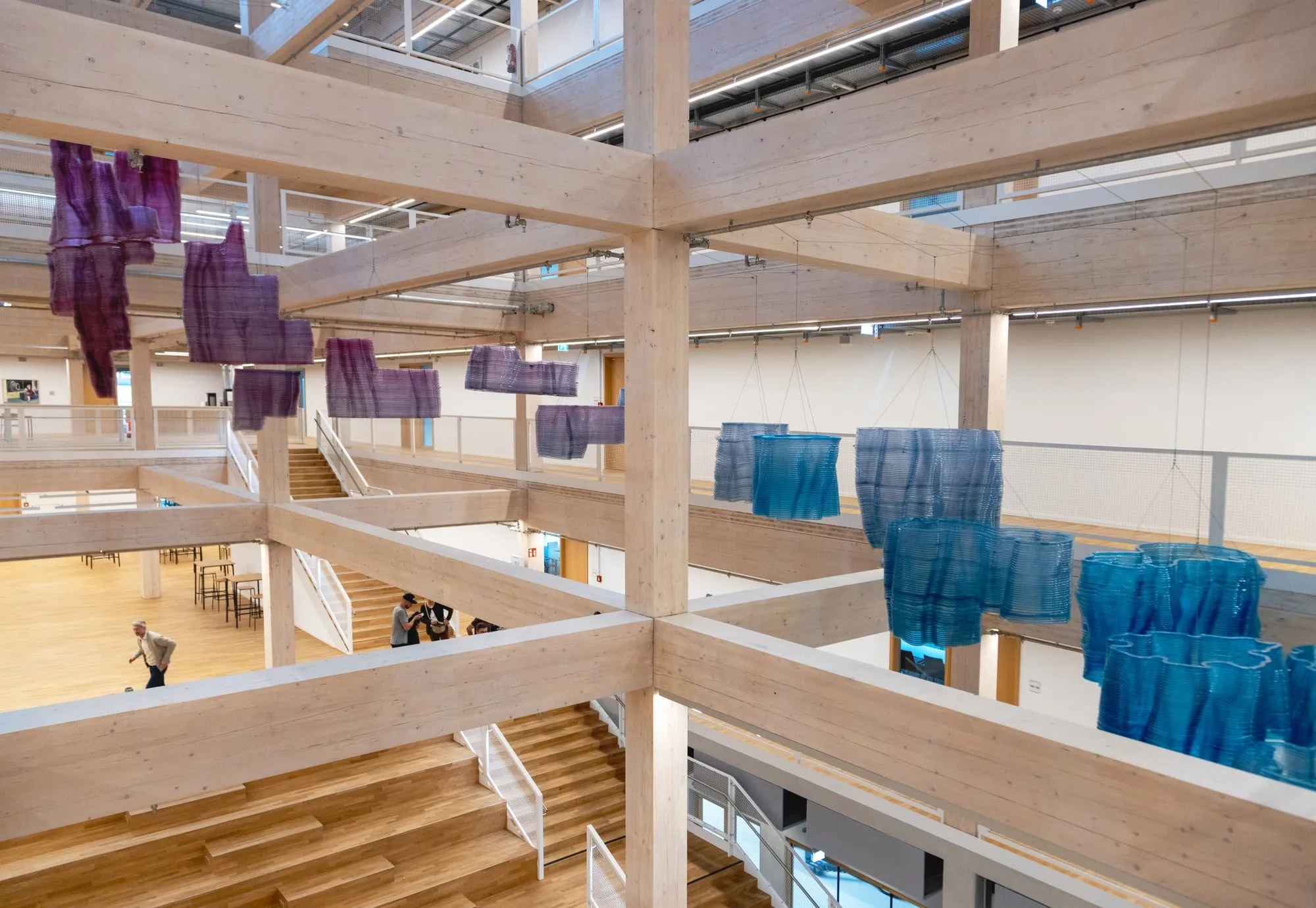
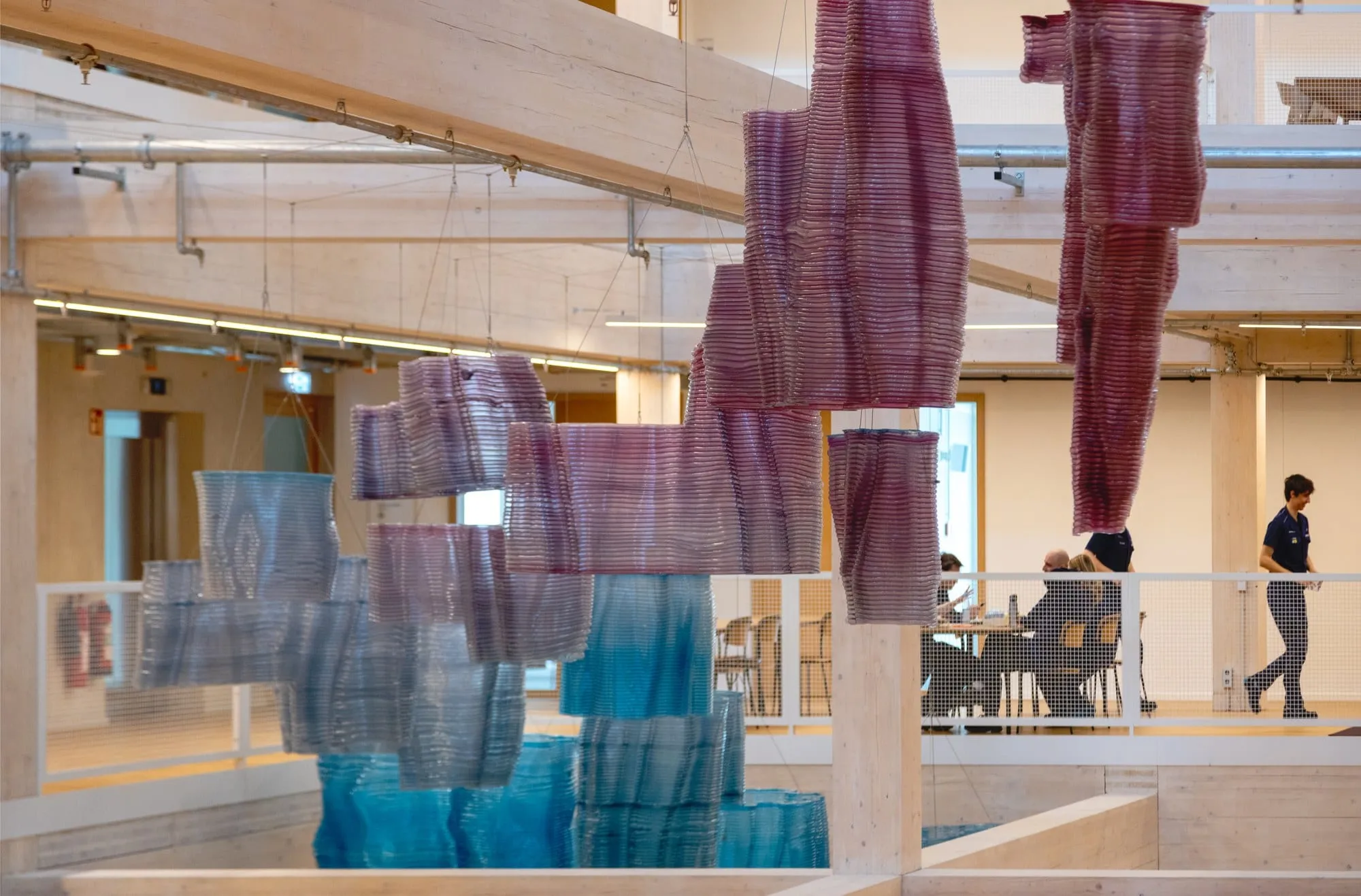
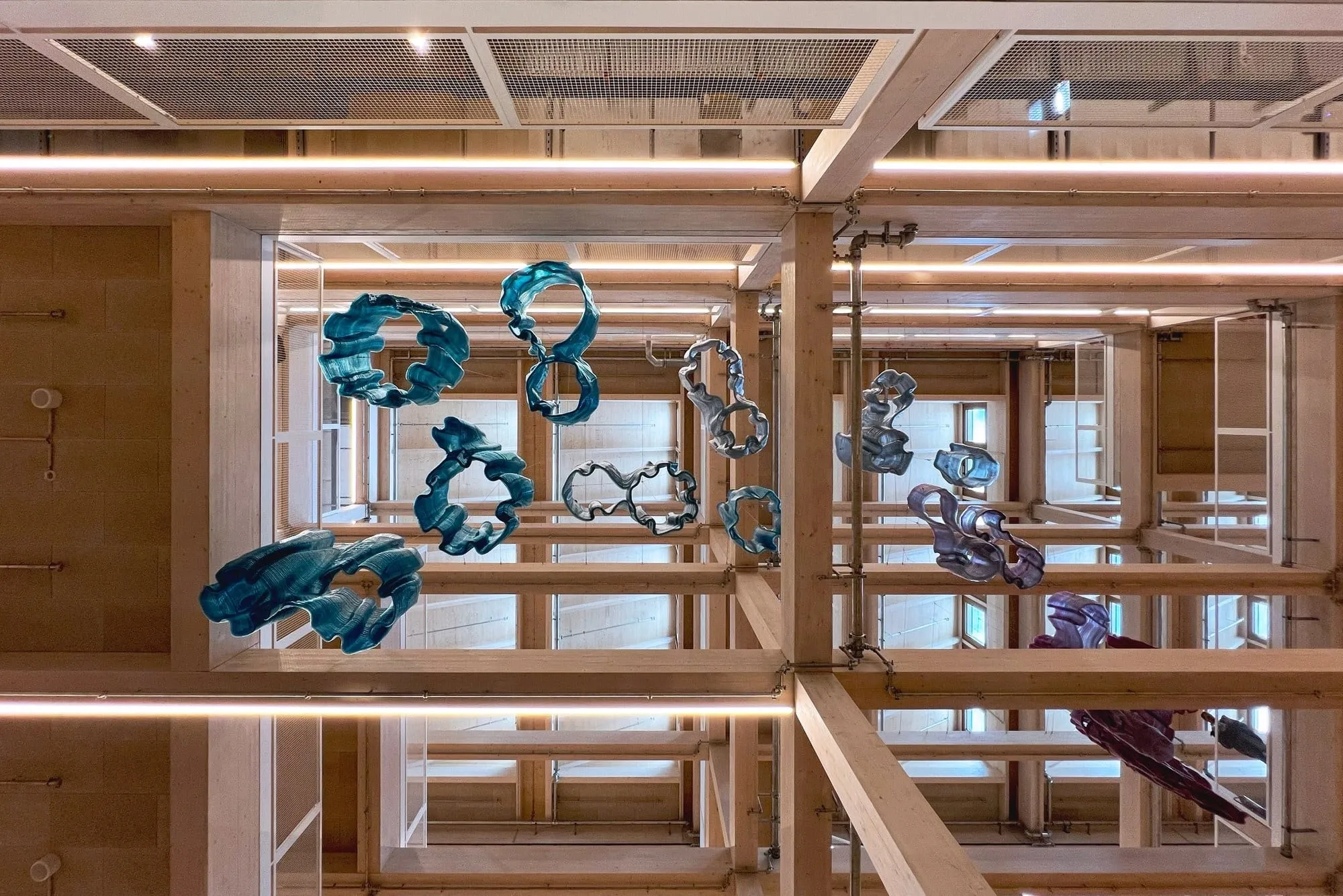
A suspended installation of seventeen Hollow-Core 3D-printed modules in recycled PETG for the atrium of the BMW Talent Campus, with a continuous blue-to-magenta colour gradient designed and rendered before fabrication.
- Year
- 2026
- Location
- BMW Talent Campus, Munich, Germany
- Institution
- ETH Zürich: MAS ETH DFAB and Digital Building Technologies
- Client
- BMW
- Collaborators
- Victoria Roznowski, Ananya Kango, Joana Tomaz, Petrus Aejmelaeus-Lindström, Benjamin Dillenburger, JAKOB (hanging system)
- Category
- Large-Scale 3D Printing, Computational Design, Robotic Fabrication, Material Research
- Role
- Research lead, Digital Building Technologies
Project
Flow is a suspended installation of seventeen Hollow-Core 3D-printed (HC3DP) modules for the entrance atrium of the BMW Talent Campus, developed between January and March 2026 in the first term of the MAS ETH in Architecture and Digital Fabrication 2025/26. Design, prototyping and production ran in three one-week phases. The brief asked for a chromatic field that varies continuously across the whole installation, and for the colour scheme to be decided before fabrication.
Design
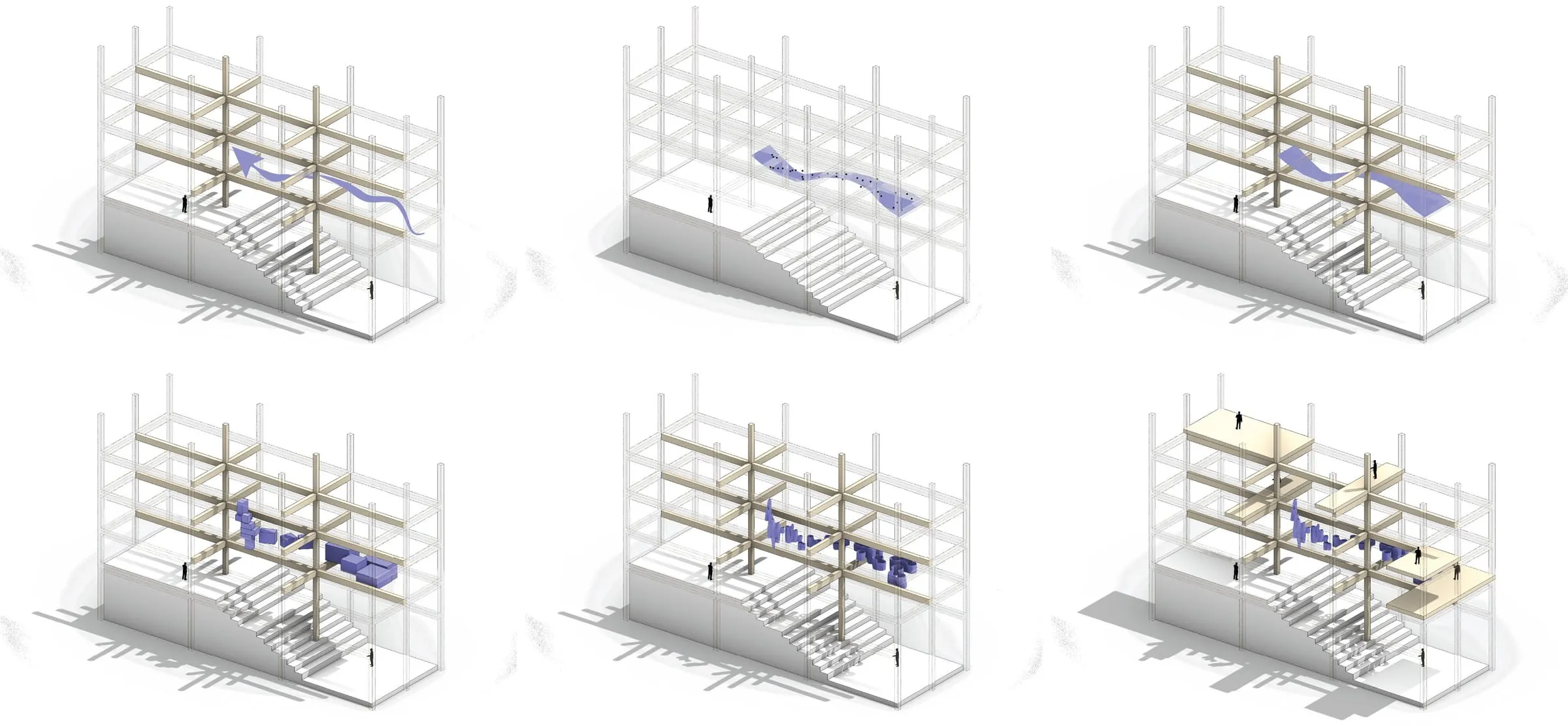
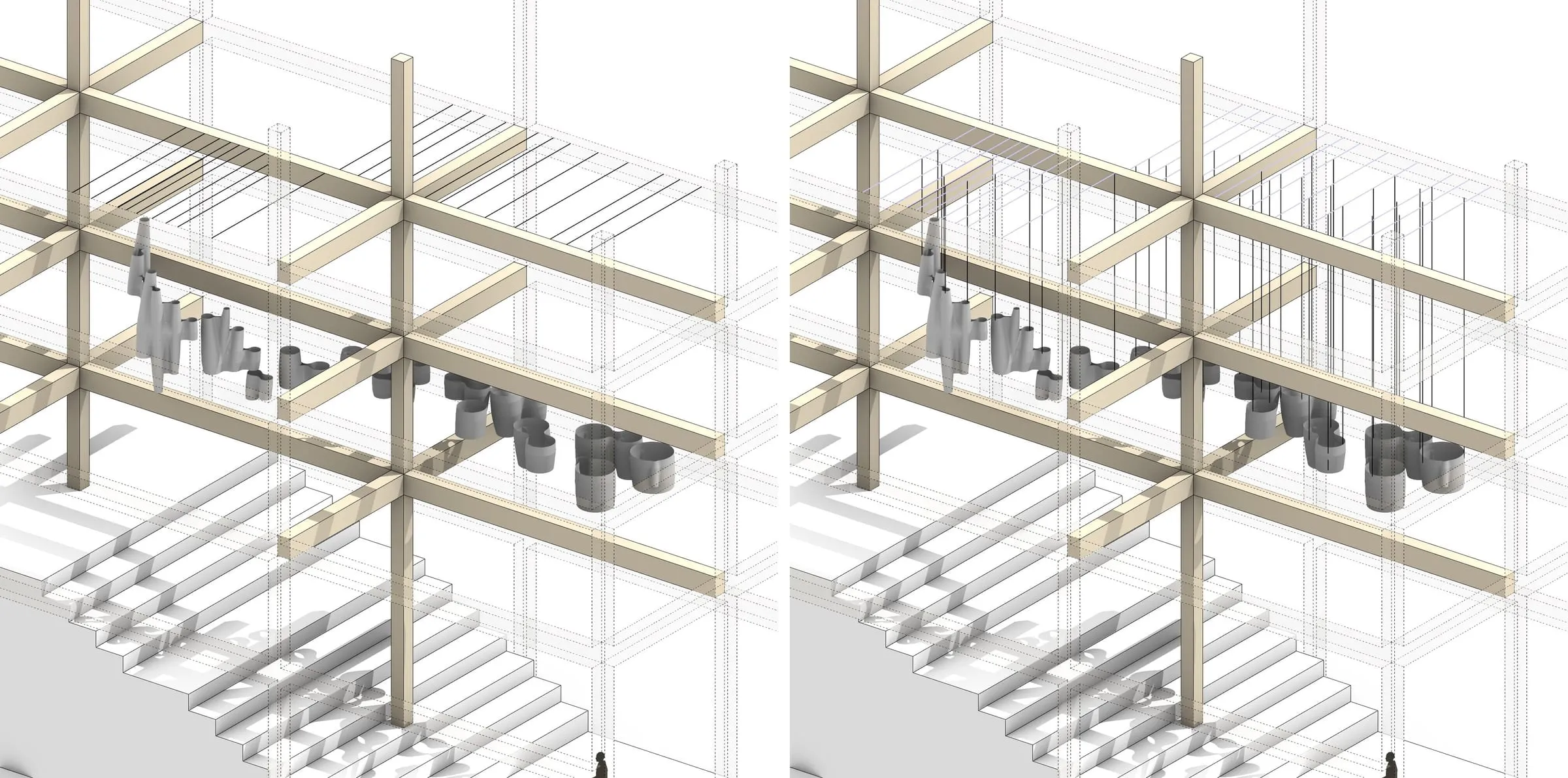
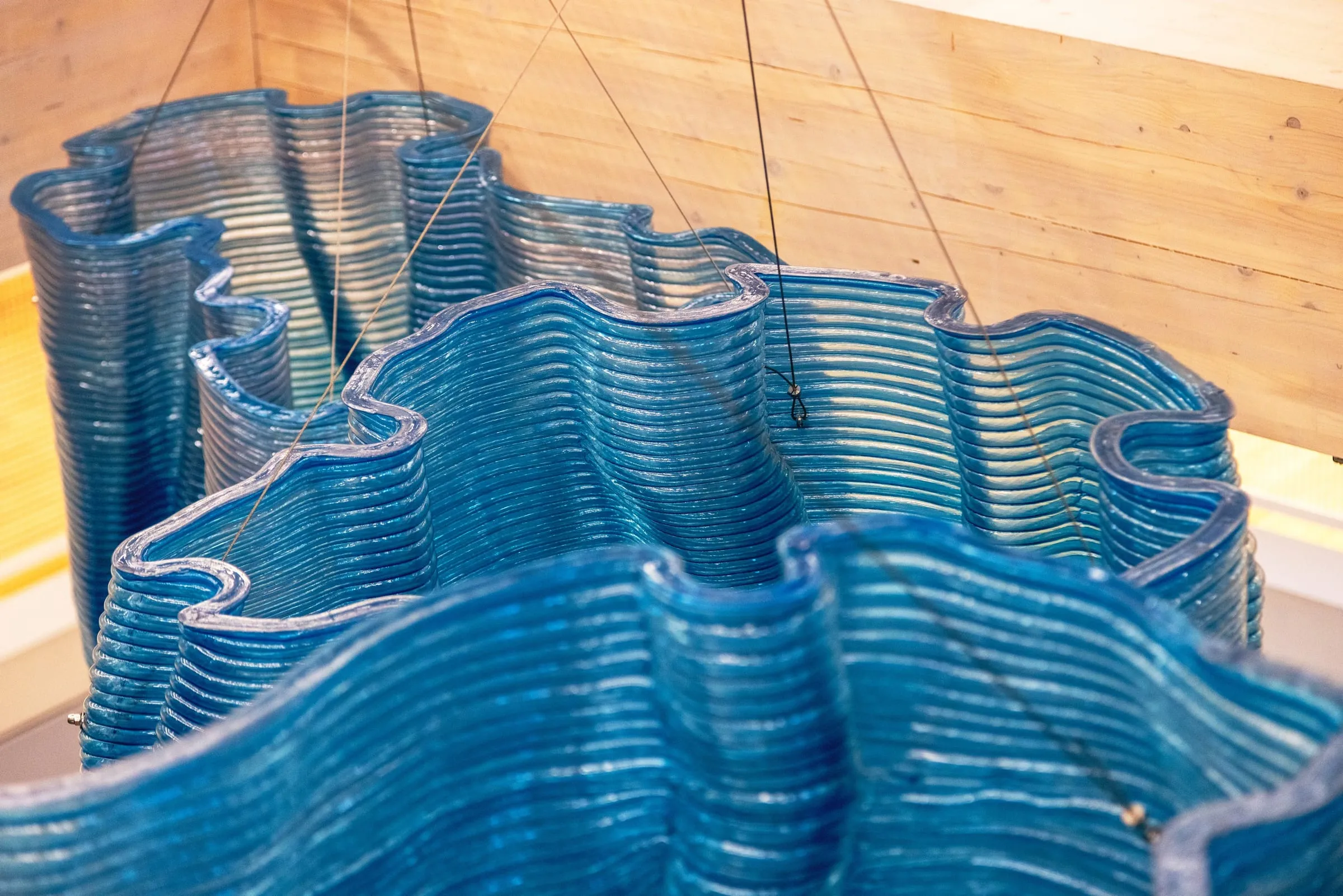
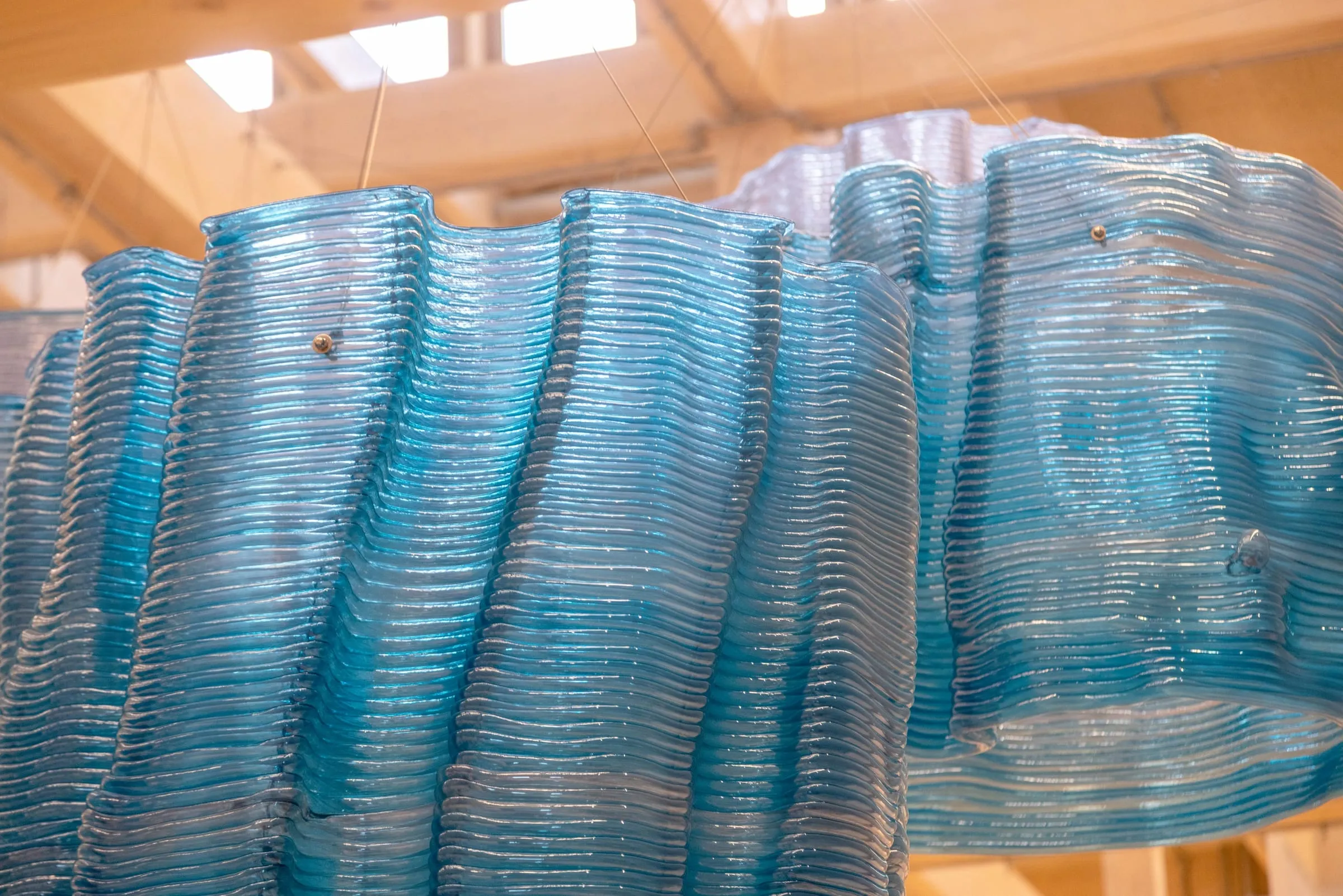
The installation takes the flow of a river as its organising figure, following the stair of the atrium. A point population was distributed along a flowing field, and each point seeded one module, generated as a lofted volume of varying radius. Two surface patterns texture every module and stiffen its thin wall: an undulation of each layer around its outline, and vertical grooves folded into the surface. The radius grows along the direction of flow, so the installation reads as a widening stream rather than a repeated array.
Colour grading
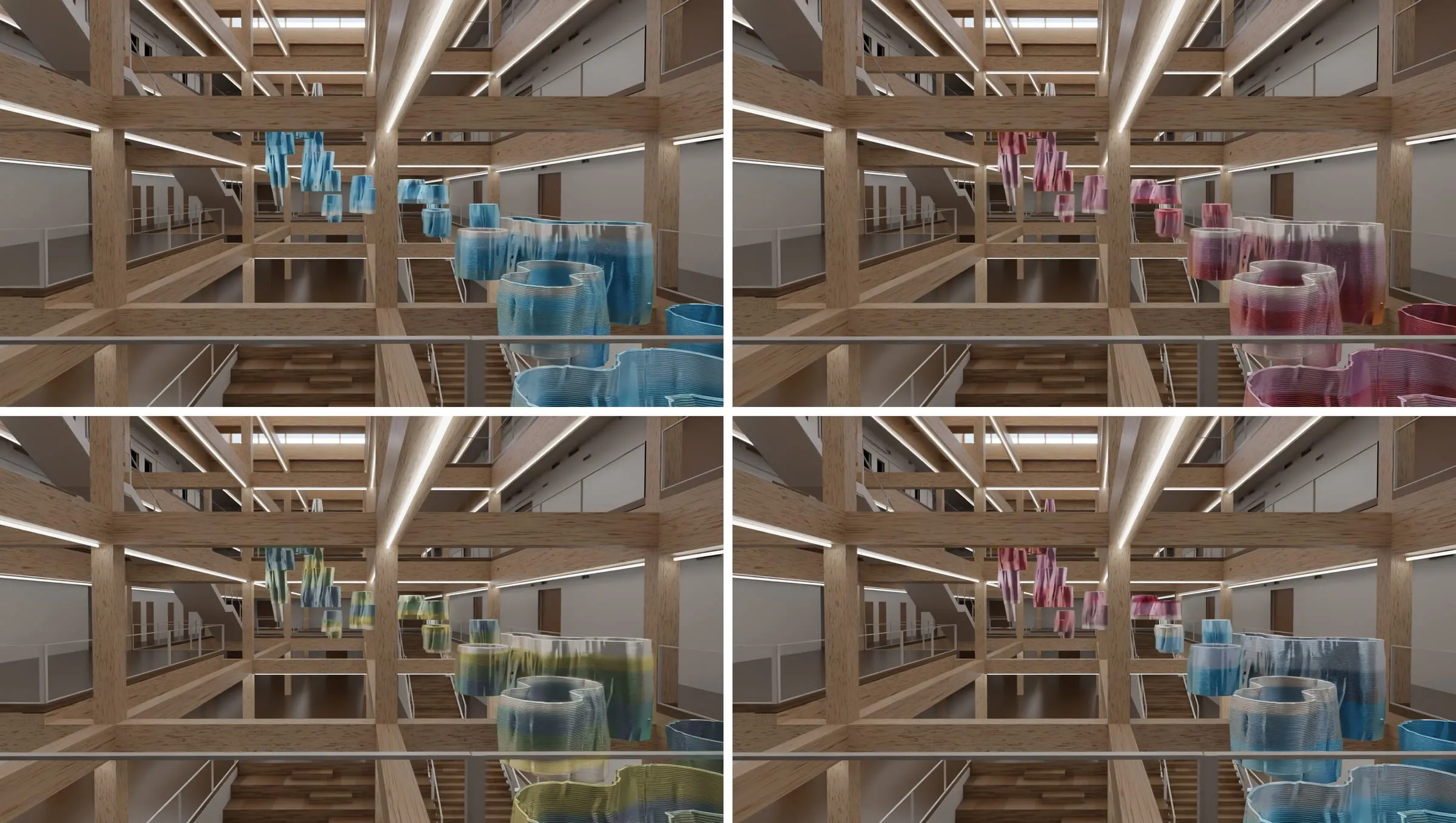
The colour scheme runs from blue to magenta through purple and is defined over the installation rather than over each module. Every module receives the part of the global field that its position intercepts, so the full transition only resolves once all seventeen pieces hang together.
The colouring hardware from Glatsch can only switch each filament on or off. To obtain continuous gradients, a pulse-density algorithm converts the colour value at each print point into a density of short activation pulses along the toolpath, which the extruder screw blends into a continuous hue with ten levels of intensity.
An automated rendering workflow in Blender paired each module with its gradient map and placed it in a model of the atrium, so colour proposals could be compared at the scale of the whole installation. Four iterations were presented to the client, and two were combined into the built scheme.
Fabrication
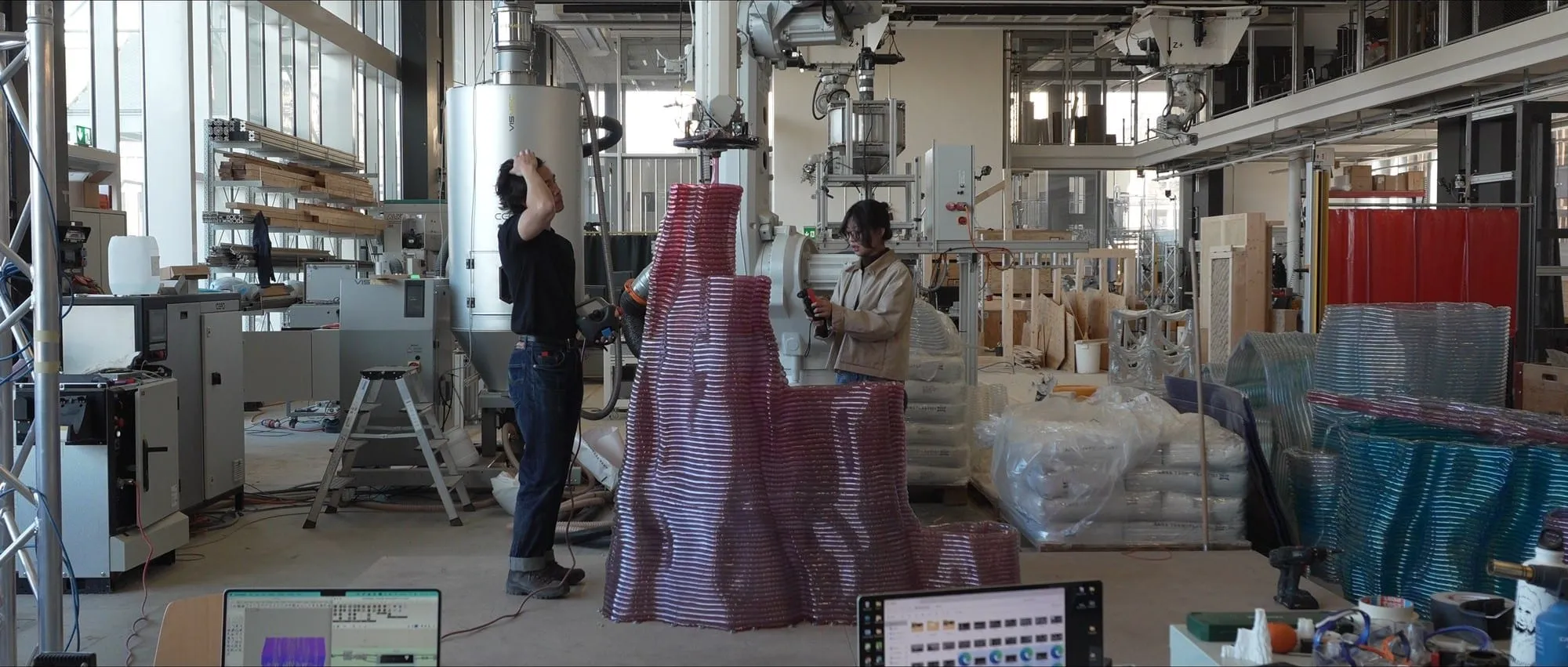
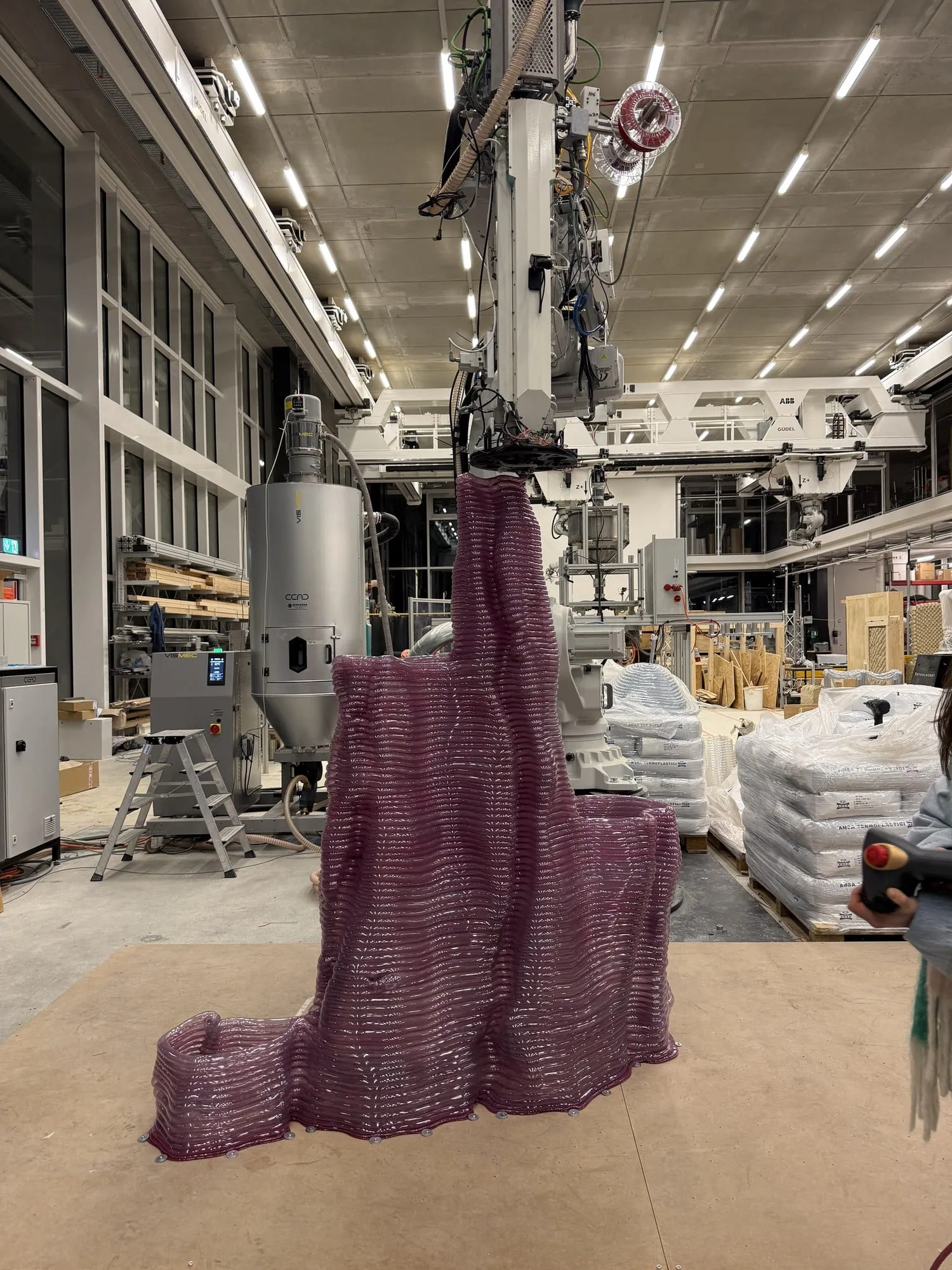
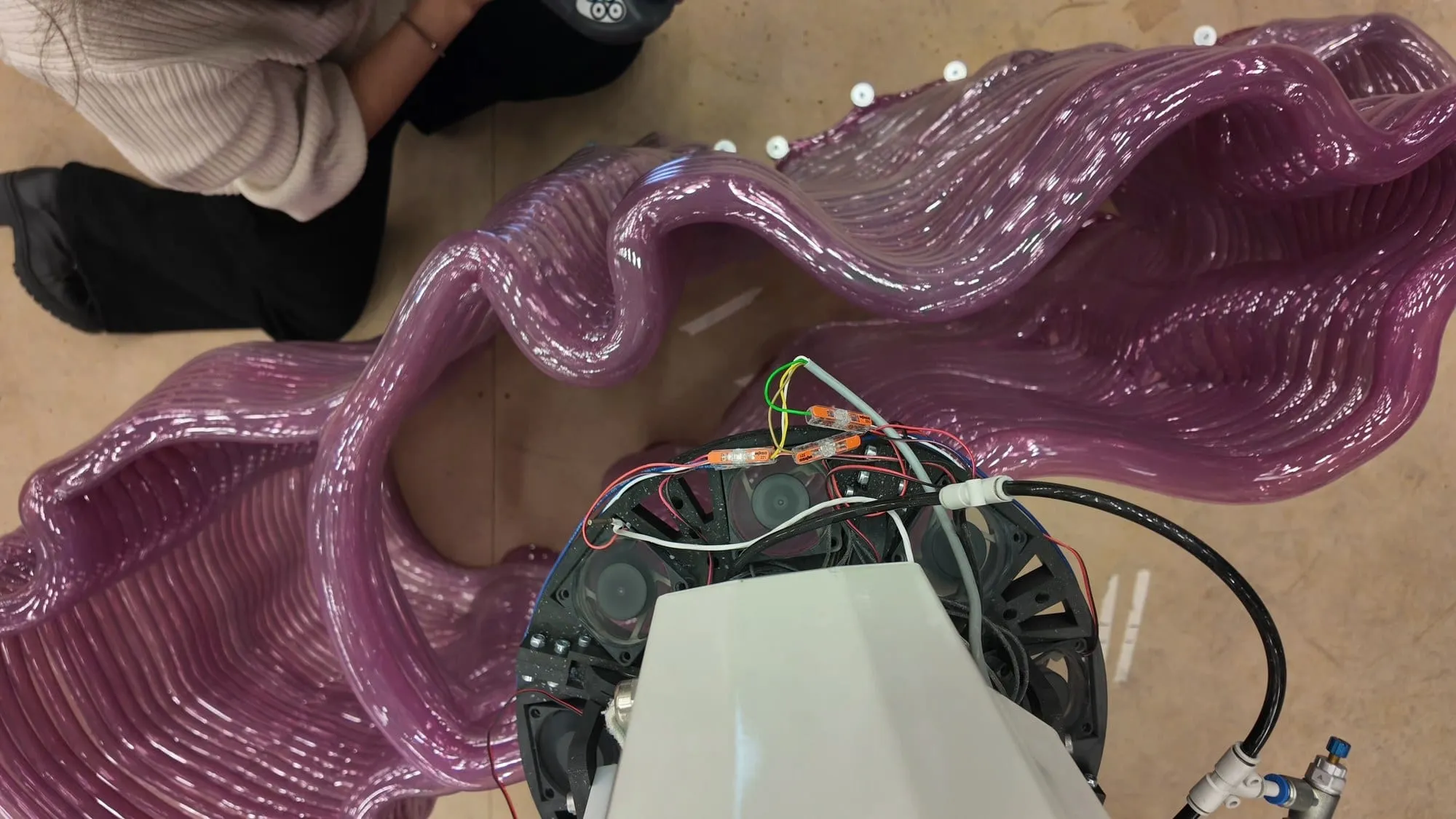
The modules were printed from post-industrial recycled PETG with an ABB IRB 6700 and a CEAD E40 extruder, producing a hollow bead 30 mm wide with a 1 mm wall at an average speed of 18 mm/s. Bridging allowed sections to be open in plan, with unsupported spans of up to 25 cm, and print speed was reduced on steep overhangs. Production took about seven days, with 50 to 53 hours of printing for roughly 0.3 t of material. After a first complete set, the four weakest modules were reprinted.
Assembly
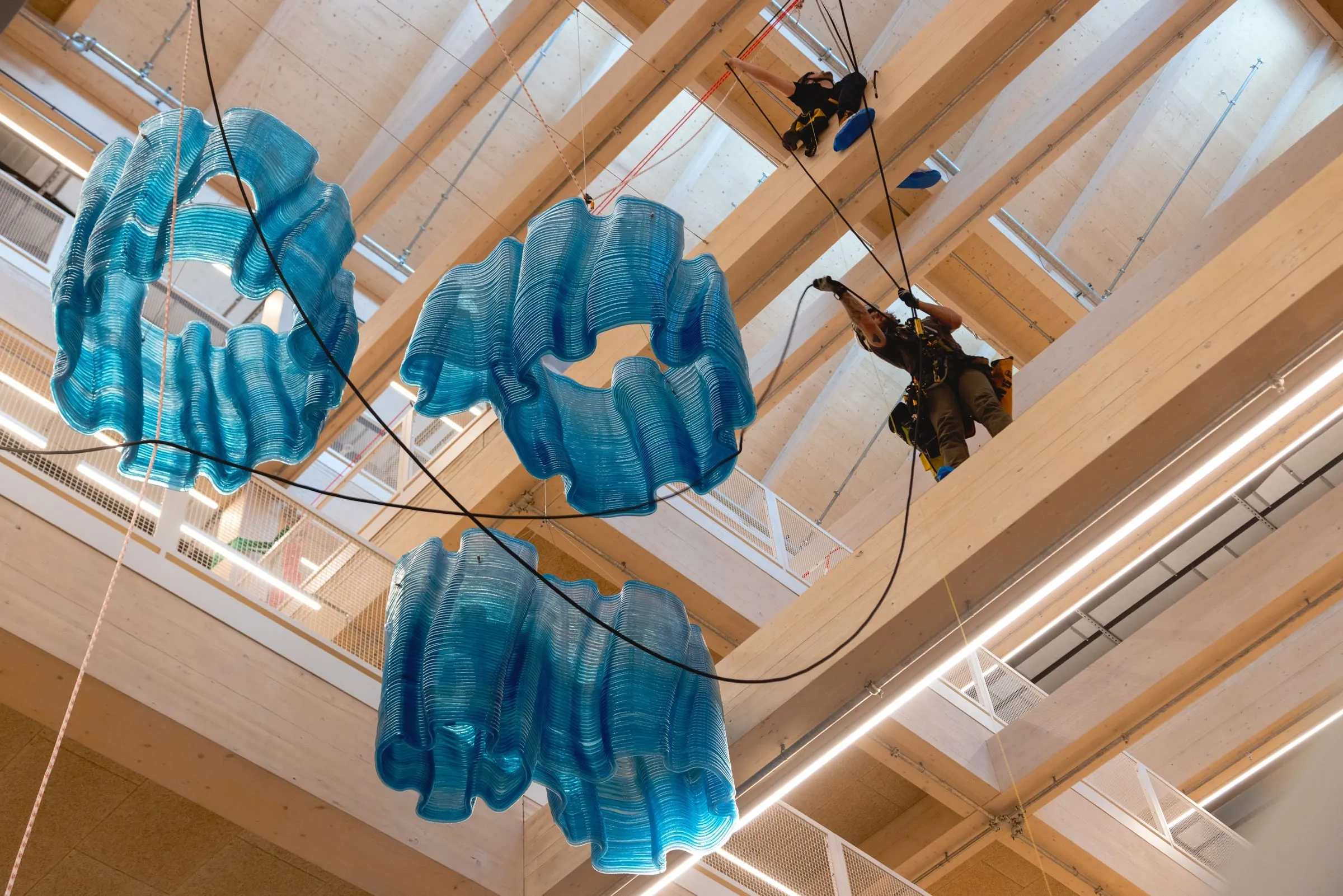
Each module hangs from three perforations whose cables converge into one vertical cable, suspended from horizontal cables spanned between the existing timber beams. The hanging system was developed with JAKOB, and the modules were installed by professional climbers using pulleys, without scaffolding, in four days.
Key figures
- 17 HC3DP modules, about 0.3 t of recycled PETG
- 50 to 53 hours of robotic printing
- Colour gradient with ten intensity levels, from blue to magenta
- Three weeks from design to production, four days of installation
Credits
MAS ETH DFAB 2025/26 students: Fahimeh Zeinali, Fridolin Jeger, Hao Cheng Wang, Juste Tresor Gatari, Linfeng Zhou, Min Ghi Park, Nadja Milas, Ruth Sidabutar, Shrey Tatamiya, Tzu Hsien Lo, Wanchen Ning, Yu-Syuan Li.
Teaching team: Dr. Petrus Aejmelaeus-Lindström, Ananya Kango, Joana Tomaz.
Digital Building Technologies: Prof. Benjamin Dillenburger, Nik Eftekhar Olivo, Victoria Roznowski.
BMW: Falko Eschenlohr, Kirsten Heinrichs, Pablo Wegmann, Leander Striebeck.
Hanging system: JAKOB, Fabian Graber.
Photos: Nik Eftekhar Olivo (installation and final views), MAS ETH DFAB 2025/26 student team (design, renderings and production)