Prefabricated Connections for HC3DP Facades
Post-processing methods and dry, reversible construction details for integrating single-pane Hollow-Core 3D-printed panels in recycled PETG into prefabricated timber mullion facades.
- Year
- 2025
- Location
- ETH Zürich, Switzerland
- Institution
- ETH Zürich: Digital Building Technologies, Gramazio Kohler Research, Architecture and Building Systems
- Collaborators
- Francesco Milano, Valeria Piccioni, Arno Schlüter, Fabio Gramazio, Matthias Kohler, Benjamin Dillenburger
- Category
- Large-Scale 3D Printing, Material Research, Prototypes and Demonstrators
- Role
- Research lead and first author: concept, methodology, fabrication, experiments and detailing
Project
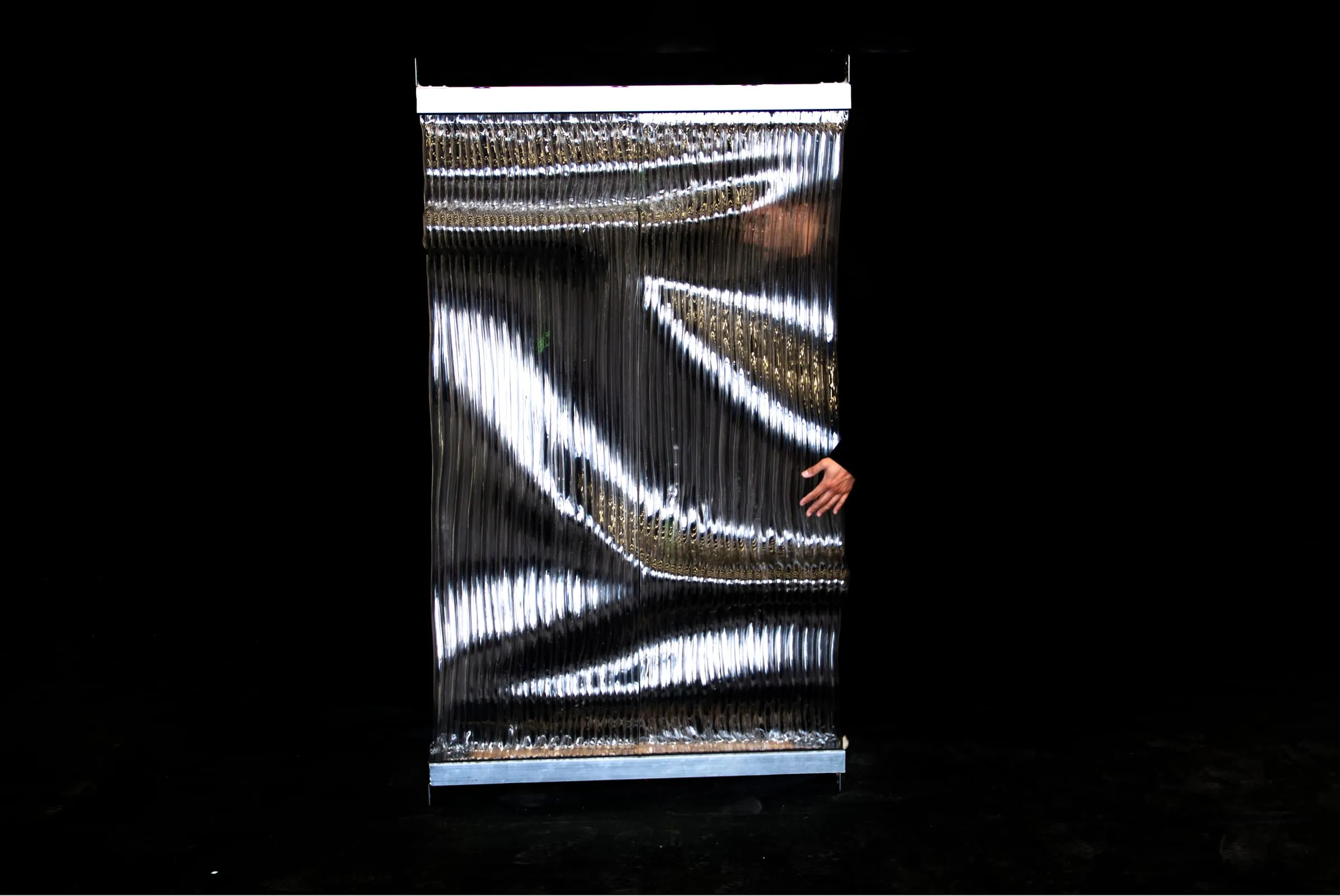
Prefabricated, highly insulating glass facades are difficult to disassemble or recycle, because they combine components with different lifespans, and they offer little room for customisation. This research explores Hollow-Core 3D Printing (HC3DP) of recycled PETG as a mono-material, customisable alternative, and develops the post-processing methods and construction details needed to integrate single-pane HC3DP panels into non-load-bearing facades with timber mullions and dry, reversible connections. It is the first study of HC3DP panels in a facade application.
Edge treatments
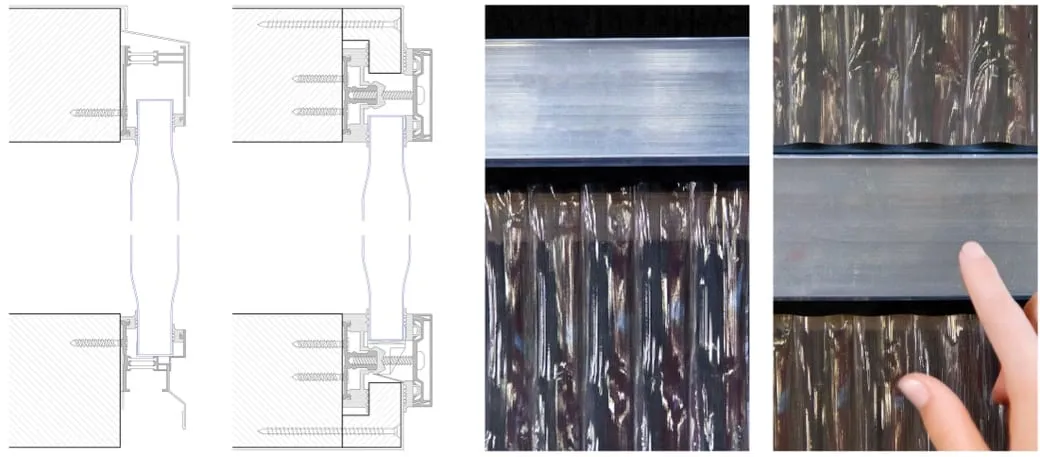
HC3DP panels end in open, tubular edges. Small samples were used to compare techniques taken from polycarbonate panel and roofing construction:
- Thermo-flattening: the edge is clamped between aluminium plates and heated with a hot-air gun. The material becomes fully pliable at 105 to 110 °C, and a 0.5 m edge was flattened in a single operation.
- Taping: aluminium, butyl and anti-dust tapes to protect the flutes. Taping works best when the grooves are slightly pre-flattened first.
- Sealing and welding: panel-to-panel joints sealed with silicone, or welded with rPETG using a hand-held welding gun. Welding keeps the panels mono-material and recyclable, and the welds can be reopened with a hot knife.
Prototype
Two doubly-curved panels of 0.5 × 1.5 m were printed as a pair with an ABB IRB 4600 and a CEAD extruder, and welded into one continuous pane of 1 × 1.5 m. Their edges were flattened and held in a prefabricated pressure-plate mullion system with EPDM gaskets on a timber structure. A flat edge of 2.5 to 3 cm proved necessary for the gaskets to grip the panel. The assembly can be taken apart by unscrewing the profiles, splitting the welds with a hot knife and removing the tape, so that the panels can be recovered and recycled.
My contribution
Concept and methodology, fabrication and robotic printing, edge treatment experiments, construction detailing, and writing of the paper.
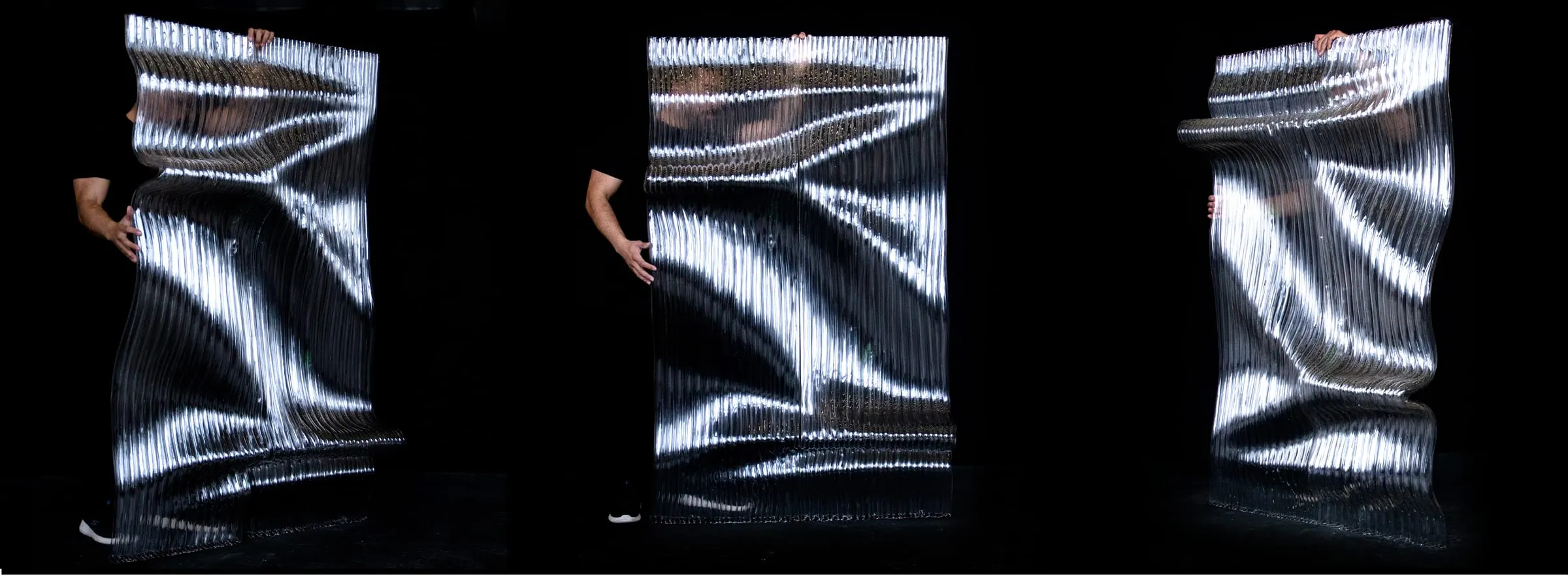
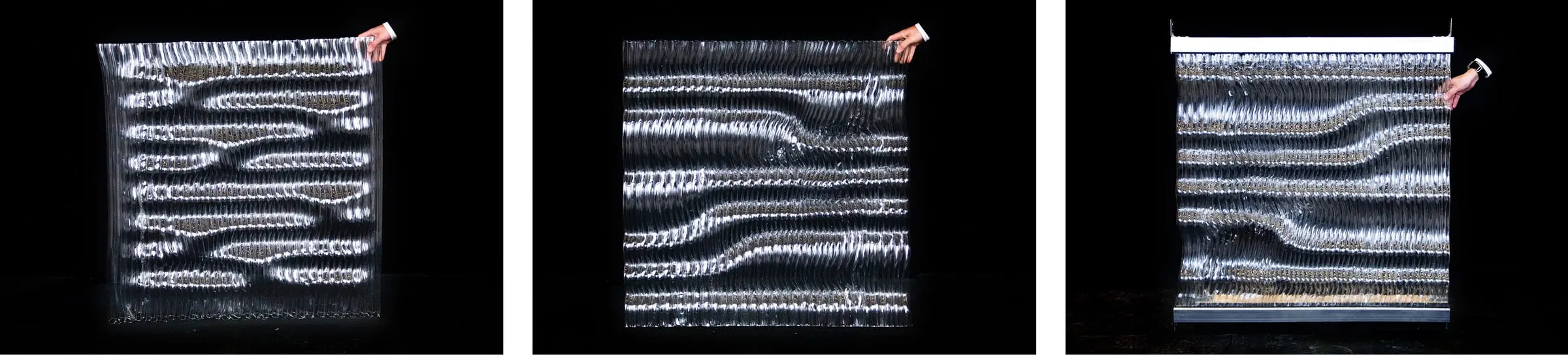
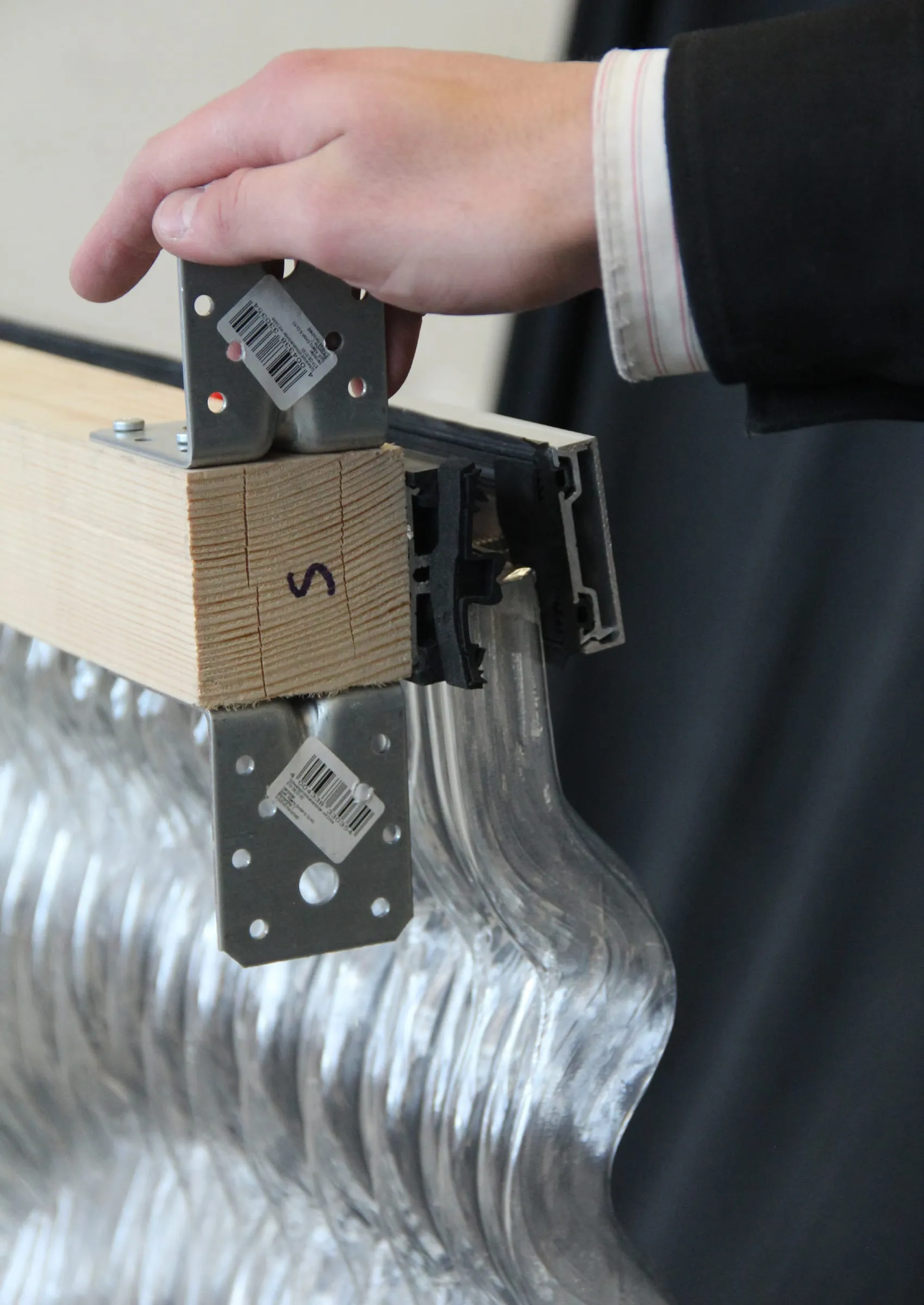
Photos: Nik Eftekhar Olivo
Publications
- Eftekhar Olivo, N., Milano, F., Piccioni, V., Schlueter, A., Kohler, M., Gramazio, F., & Dillenburger, B. (2025). Prefabricated connections for Hollow-Core 3D printed facade elements. Proceedings of CAADRIA 2025 (Vol. 2, pp. 91–100), Tokyo.