Tree Table
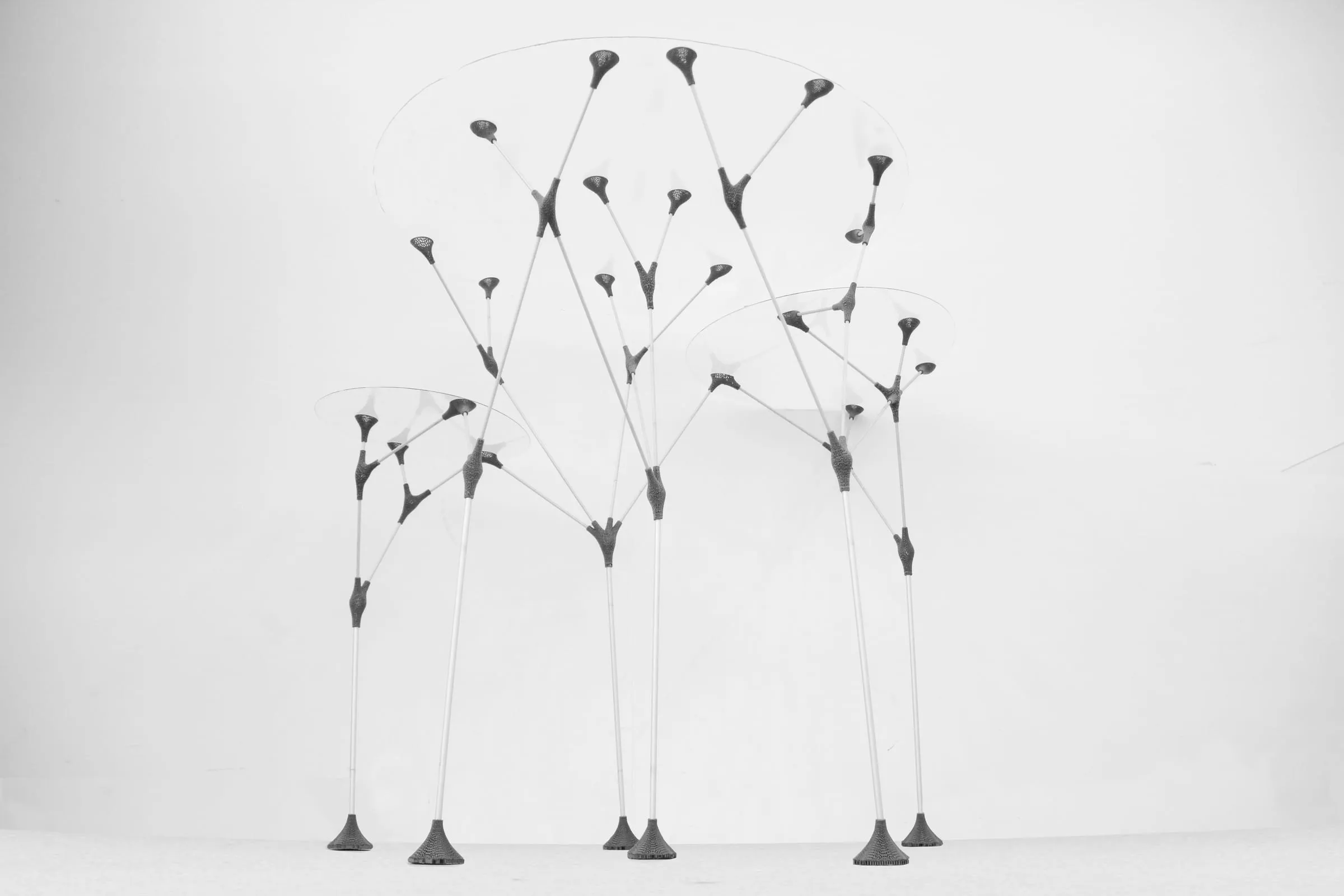
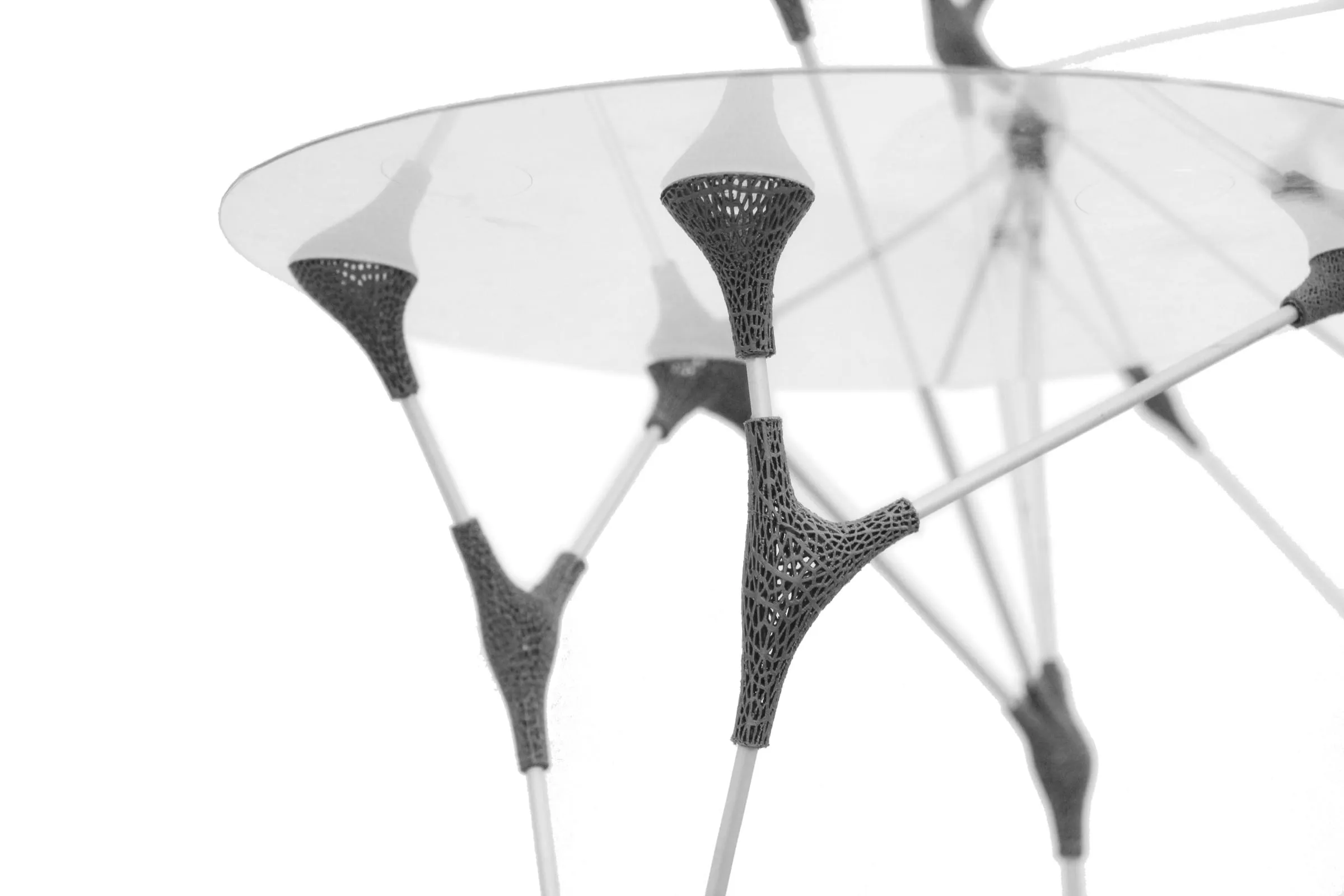
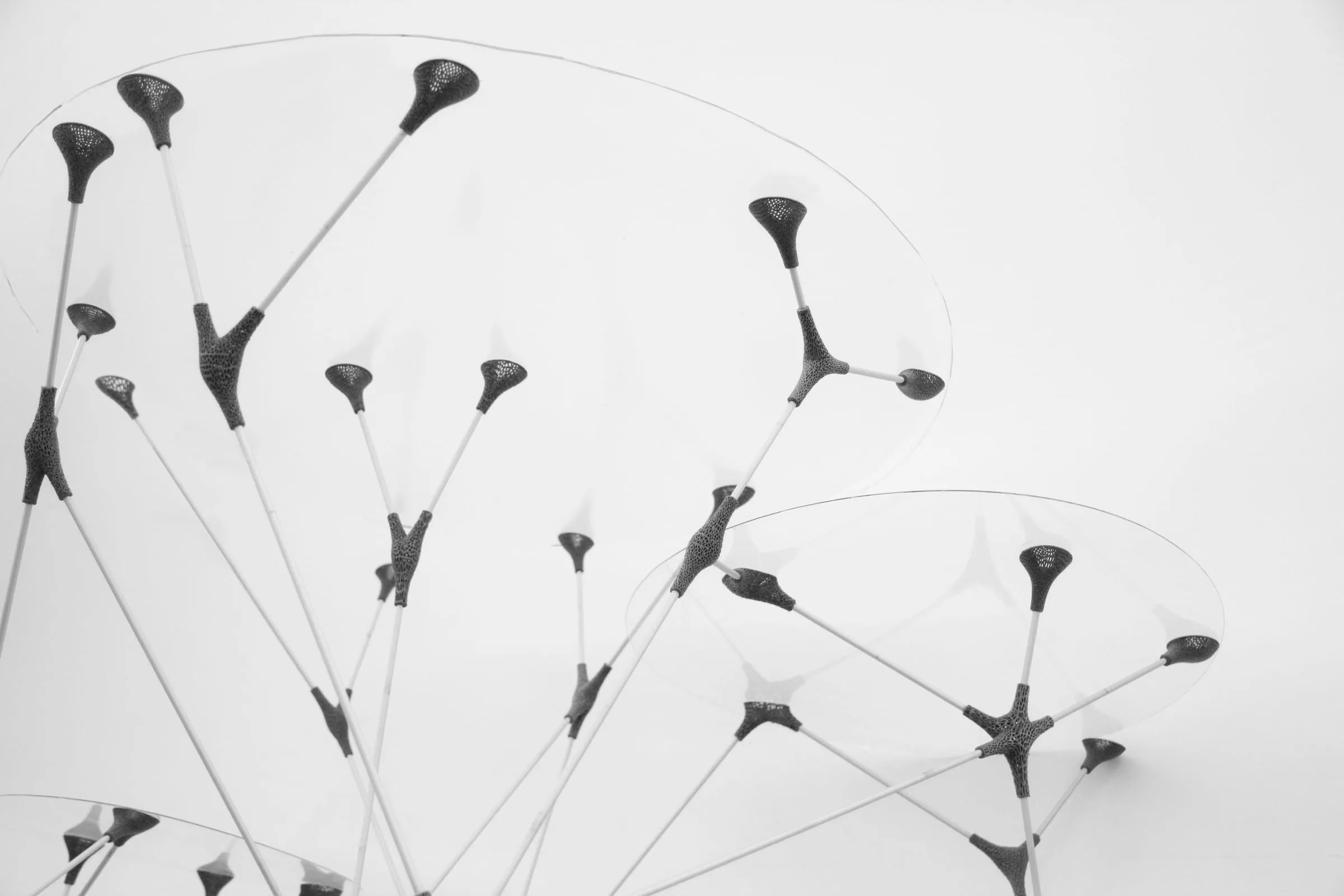
A branching table of metal rods joined by 3D-printed nodes, generated by a random growth algorithm and detailed through volumetric modelling, Catmull-Clark subdivision and porosity based on mesh subdivision. MAS ETH DFAB student project.
- Year
- 2018
- Location
- ETH Zürich, Switzerland
- Institution
- ETH Zürich, MAS ETH in Architecture and Digital Fabrication, module T1
- Collaborators
- Keerthana Udaykumar, Sofia Michopoulou, Marirena Kladeftira (tutor), Mathias Bernhard (tutor)
- Category
- Computational Design, Prototypes and Demonstrators
- Role
- Design, branching algorithm, computational design and mesh subdivision, printing and assembly
Project
A student project in the first module (T1) of the MAS ETH in Architecture and Digital Fabrication, developed with Keerthana Udaykumar and Sofia Michopoulou and tutored by Marirena Kladeftira and Mathias Bernhard. The table is a branching structure of metal rods joined by 3D-printed nodes, inspired by trees and neuronal networks.
Branching design
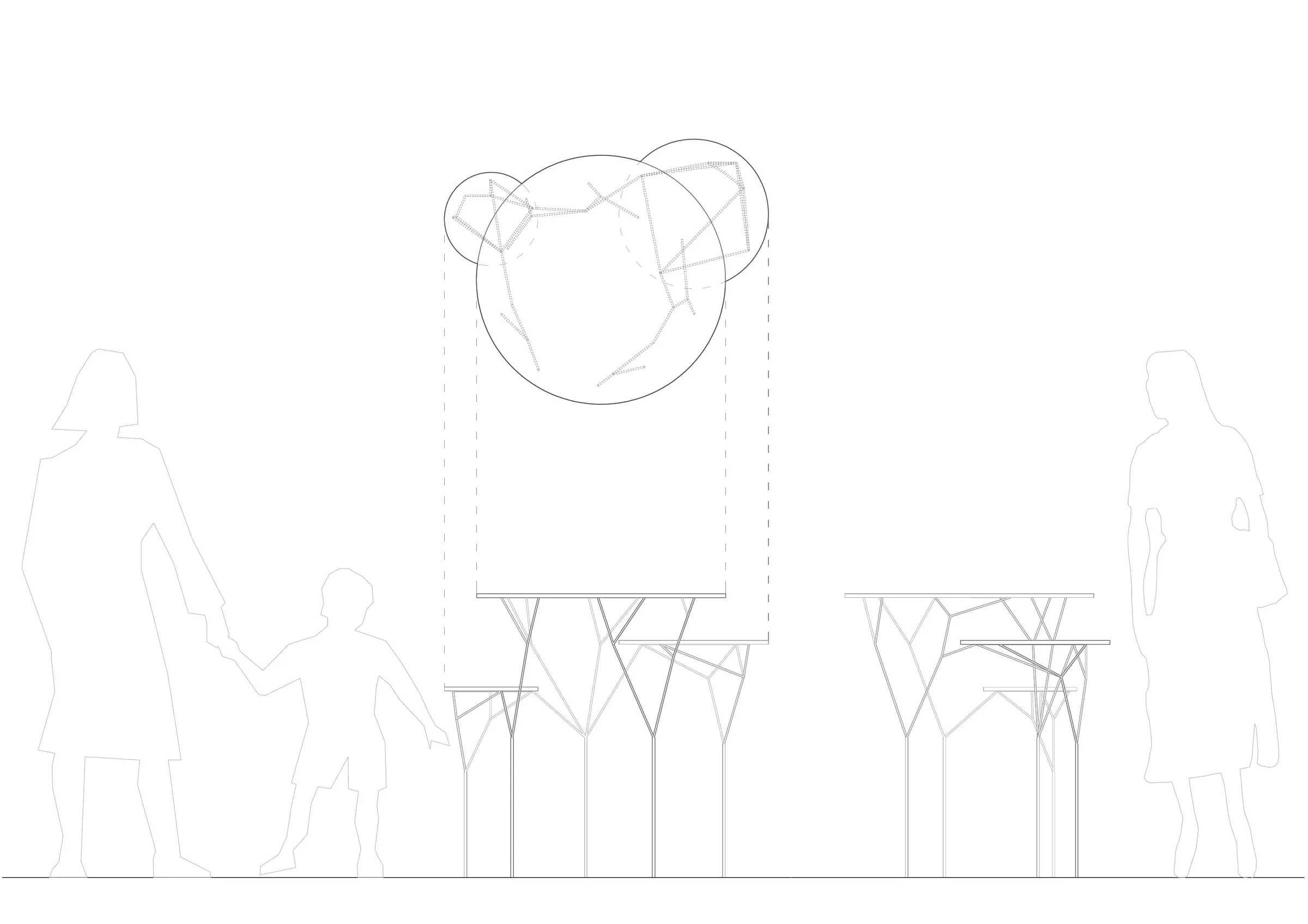
The overall structure was generated by a simple random growth algorithm, which can produce an infinite number of iterations, each of them unique. The table carries three surfaces at different heights and with different radii.
Node design
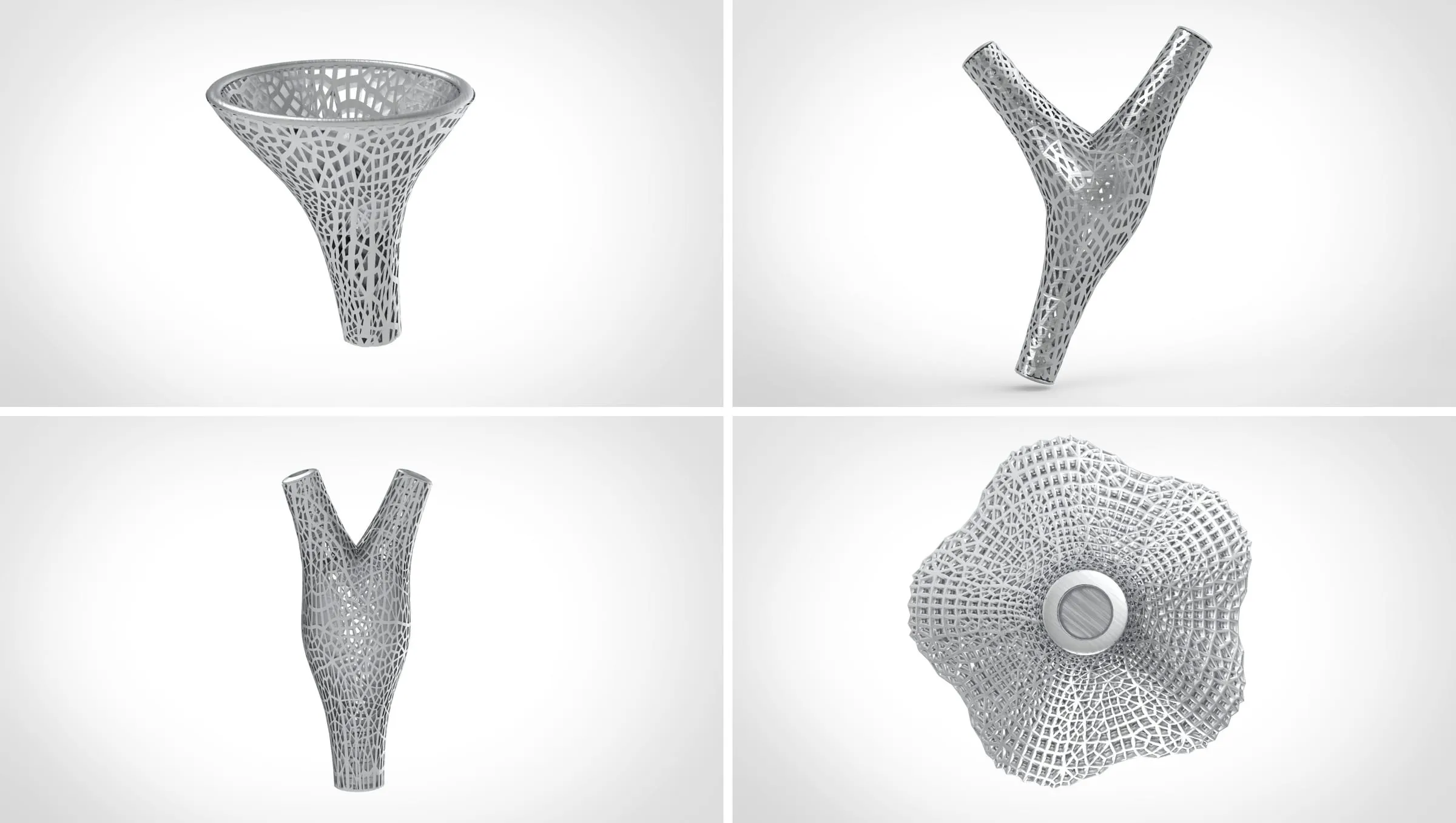
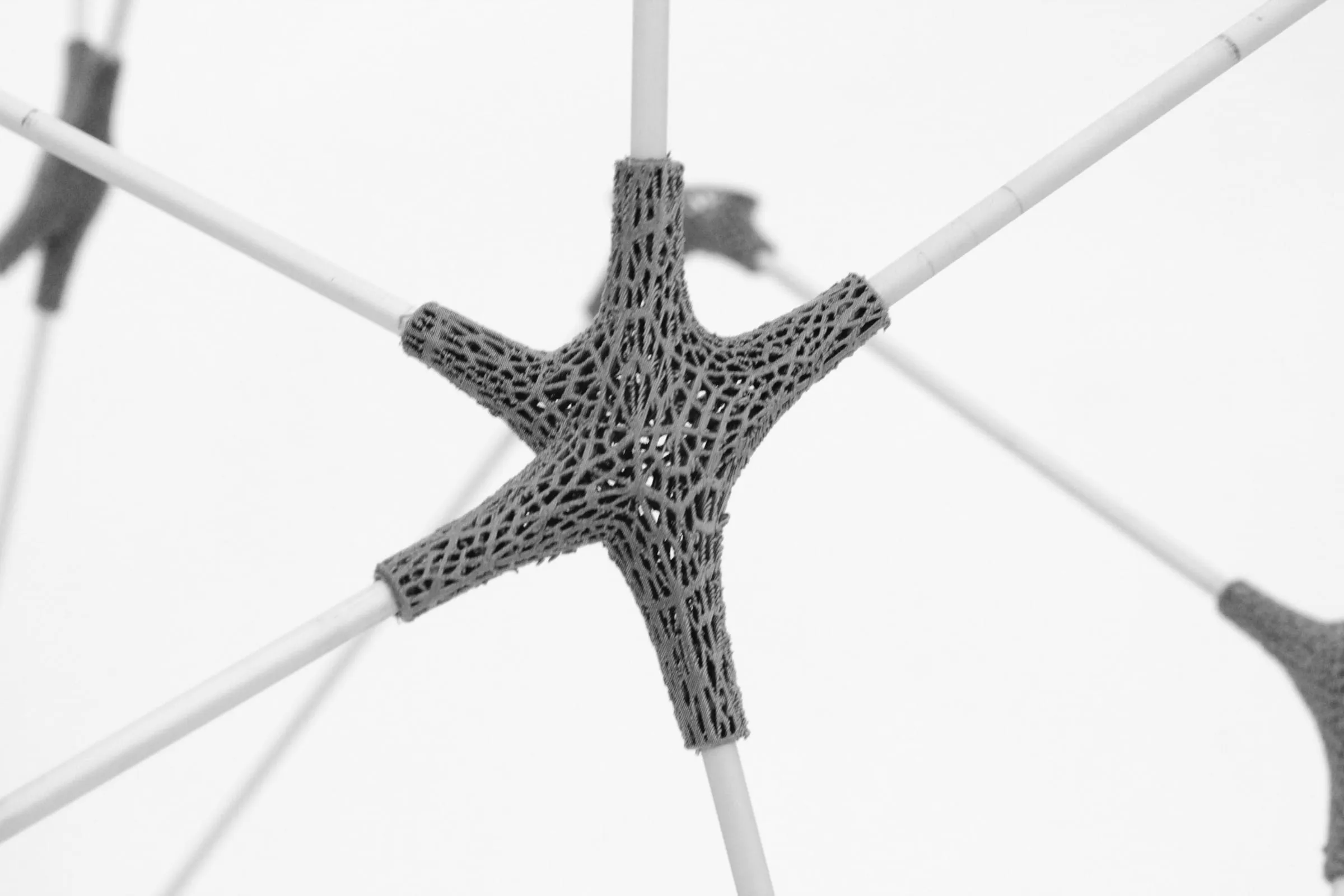
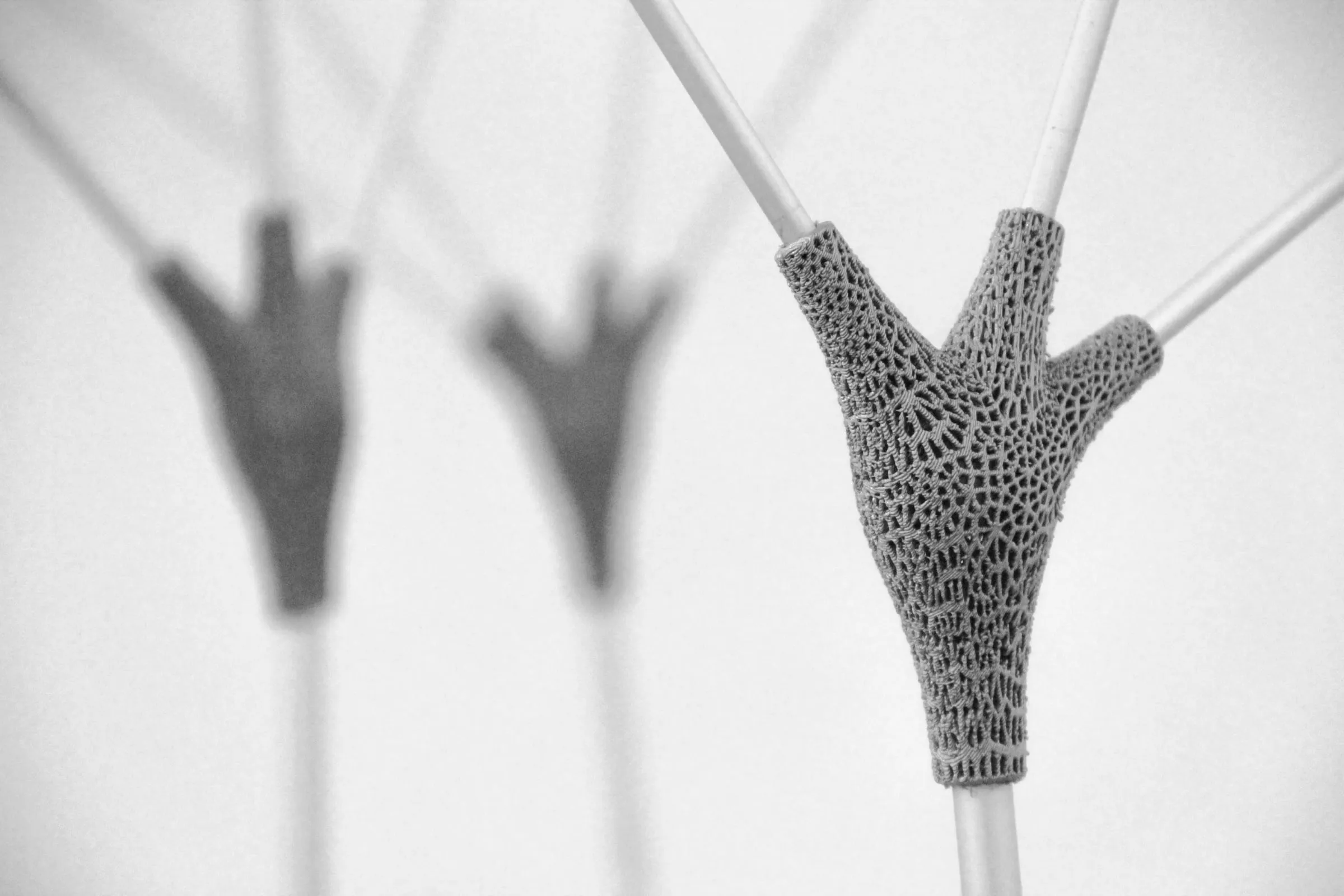
Once the overall geometry was set, the nodes were specialised according to the task they perform. Four node types were defined: base nodes on the floor, branching nodes with different numbers of branches, connection nodes, and holding nodes that support the surfaces.
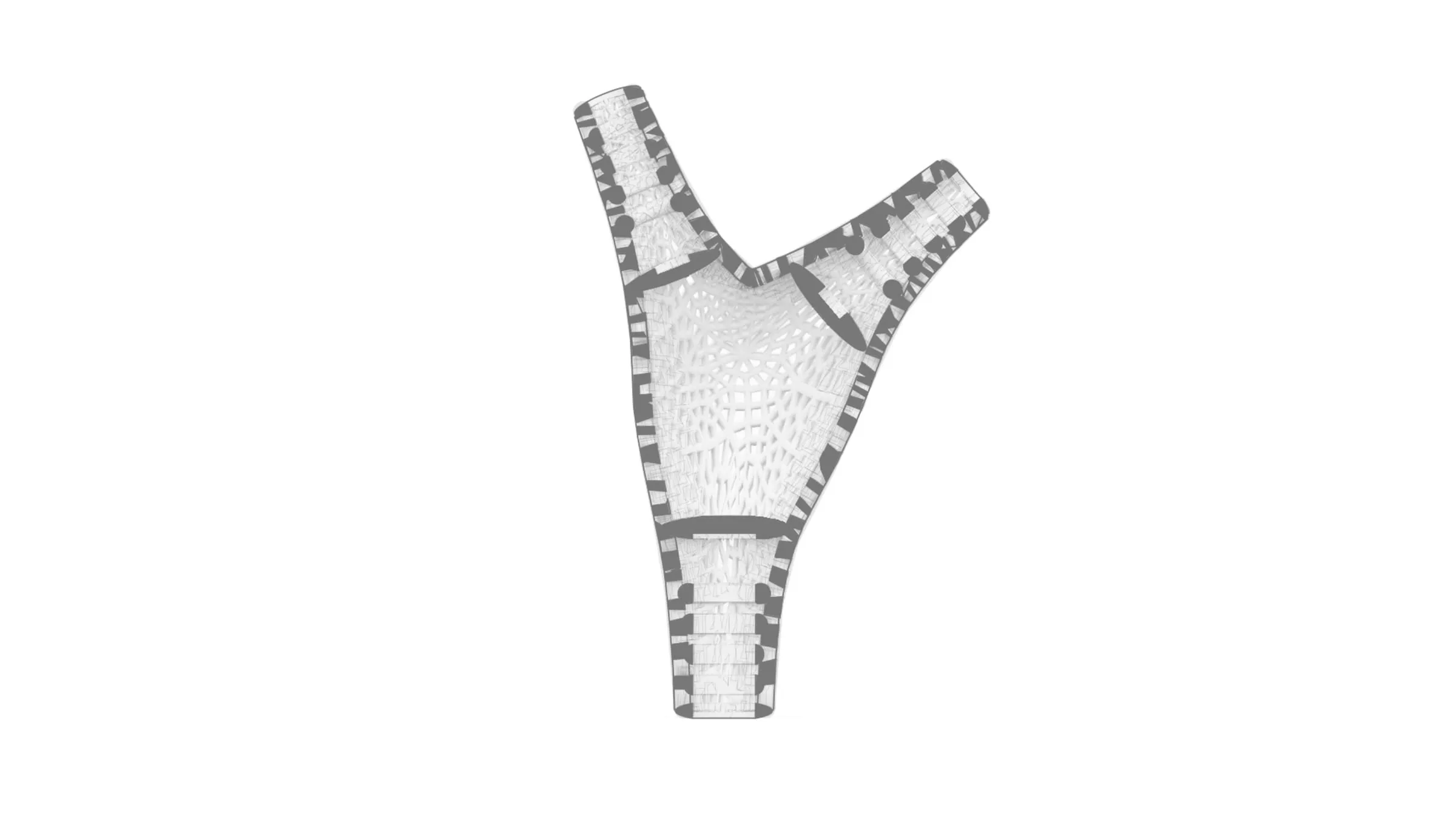
Each node starts from the axes of the rods meeting it and a sphere at their crossing point. These were combined through volumetric modelling and blended with Axolotl. The mesh was then rebuilt at a lower definition and post-processed in Processing, where it was smoothed with Catmull-Clark subdivision and given a porosity based on mesh subdivision. Finally, the mesh was extruded into a printable thickness, and rings to hold the metal rods were added by Boolean operations.
Fabrication
The nodes were printed in PLA on Prusa desktop 3D printers, and the table was assembled by inserting the metal rods into the printed rings.
My contribution
Design, the branching algorithm, computational design and mesh subdivision, printing and assembly.
Photos: Nik Eftekhar Olivo, Keerthana Udaykumar, Sofia Michopoulou